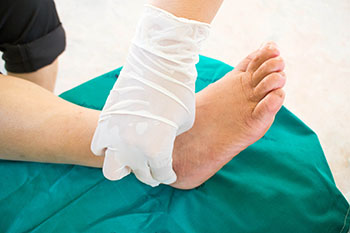
Wound care is particularly important for those with diabetes. It’s possible that what appears to be a small wound could turn into more severe foot complications down the road if left untreated. It’s common for those with diabetes to experience neuropathy. Neuropathy is a type of nerve damage that affects the body and can cause you to lose feeling in the feet. If you’re no longer experiencing feeling in your feet and a wound develops, it’s very possible it may go unnoticed if you don’t check your feet daily.
Some factors that contribute to the formation of wounds on the feet include wearing tightly fitted shoes, getting a pebble stuck in your shoe, or simply walking. What may appear to be just a small inconvenience such as a blister or callus can worsen over time, so it’s important to be safe and seek the attention of a professional. If you’ve developed a wound, it’s recommended that you try your best to keep the weight off of the area until you’re able to meet with a podiatrist.
Some ways to prevent wounds from developing include checking your feet daily for any injuries, washing and drying your feet daily, dressing for comfort and making sure your toes have enough space, and properly trimming your toenails straight across. Because wounds can lead to more severe complications, especially for those with diabetes, we recommend you speak with a podiatrist for professional guidance and a suggested plan for treatment.
Wound Care Q & A
What is wound care?
Wound care refers to the medical and surgical treatments for wounds. A wound is an injury to the skin, the tissues underneath the skin, or both.
Wounds may result from surgery or an injury. When you have wounds on your feet, you may need wound care from the experts at Trinity Foot & Ankle Specialists.
The blood vessels in the feet are tiny, which may affect wound healing. When you have a foot or toe wound that fails to heal, you may be at greater risk of developing an infection.
The team at Trinity Foot & Ankle Specialists includes podiatrists with advanced training in limb salvage (preventing limb amputation) and wound care for people with diabetes.
Who needs wound care?
Anyone with a wound that fails to start healing within two weeks or fails to fully heal within six weeks needs wound care.
However, if you have a history of diabetes, peripheral artery disease (PAD), or peripheral vascular disease (PVD), you need wound care for any foot or toe injury right away.
People with diabetes are at risk of developing serious complications from a foot or toe ulcer. Diabetes causes high blood sugar, which damages blood vessels (affecting circulation) and nerves (affecting sensation).
If you have nerve damage — neuropathy — you may not realize you have a foot or toe injury. And with poor circulation, the wound may not heal, leading to an infection and possible limb amputation.
PAD and PVD also affect circulation to the feet, which may impair wound healing.
What can I expect during wound care?
You can expect compassionate treatment from the team at Trinity Foot & Ankle Specialists when you come in for wound care. The specifics of your wound care may depend on the severity of your wound and your medical history.
Initial treatment may include:
- Debridement: Removal of dead skin and tissue
- Cleaning the wound
- Dressing the wound
- Antibiotics to treat a bacterial infection
- Diet modifications
- Nutritional supplements
- Activity modifications
- Custom orthotics
The team has you come in regularly so they can continue to clean and care for your wound until it fully heals.
For more serious wounds, the team may perform advanced orthoplastic surgery such as muscle flap or skin grafting to cover the wound and encourage healing. Treatment focuses on limb salvage.
To schedule a wound care appointment, call Trinity Foot & Ankle Specialists, or book online today.
