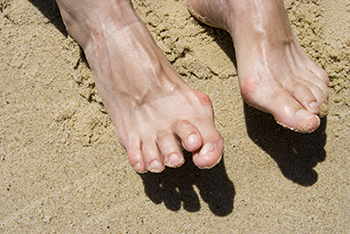
Hammertoes can be identified by an abnormal bend in the middle joint of the toe. This abnormal bending can lead to added pressure on the toe when wearing shoes. It can also cause pain or discomfort when walking or running. Because hammertoes typically worsen overtime and become increasingly more rigid, it’s recommended that you seek the help of a podiatrist for treatment options if you believe you’re experiencing the symptoms of this deformity.
Those experiencing hammertoe may also find other foot related issues that come with this condition, such as corns or calluses. Some factors that may influence your likelihood of getting hammertoe include old age, toe length, improper footwear, and genetics. Those who have diabetes or arthritis are also more likely to have foot related complications, including hammertoe.
To help better prevent yourself from getting hammertoe, it’s recommended that you avoid wearing shoes that limit the room for your toes. Footwear with low heels, as well as adjustable straps or laces, can be useful when it comes to providing your feet with ample room to move. Buying shoes that fit are also important, which is why we recommend shopping at the end of the day when your feet are at their largest. This helps you avoid choosing a shoe too small for your feet.
Orthotics, as well as medical pads for corns and calluses that may develop due to your hammertoe, are recommended to help relieve discomfort. Light toe exercises may also be helpful for strengthening the muscles and mobility of your toes.
For a proper diagnosis and recommended treatment plan, we suggest you consult with a podiatrist for professional help and care.
Hammertoe Q & A
What is hammertoe?
Hammertoe occurs when one or both joints in any of your smaller toes develops an abnormal contracture that causes them to bend at the middle joint. Hammertoe develops when there’s an imbalance between a muscle and tendon. The imbalance makes the toe bend, and it eventually leads to mechanical changes in your foot.
The way the toe bends can put it under pressure and lead to:
- Pain when wearing shoes
- Irritation of the toe
- Inflammation
- Redness
- Burning sensation
- Corns and calluses
In severe cases, you may develop open sores.
Hammertoes are typically mild to begin with and worsen over time. At first, hammertoes are flexible, but they can become increasingly rigid without treatment. Rigid hammertoes usually require more invasive treatment.
How is a hammertoe treated?
The Trinity Foot & Ankle Specialists team begins with conservative treatments if your hammertoe is still flexible. These treatments ease the pain of hammertoes but don’t reverse the abnormal bending. Your podiatrist might recommend:
Medications
Nonsteroidal anti-inflammatory drugs (NSAIDs) can reduce pain and inflammation.
Ice
Applying an ice pack to the hammertoe at intervals throughout the day helps reduce inflammation and pain.
Changes in footwear
Shoes need a wide toe box and mustn’t be too short for your toes. Avoid wearing pointed shoes.
Padding
You might benefit from using over-the-counter footpads if you have corns or calluses.
Splinting, strapping, or bracing
Your podiatrist might fit small straps or splints to realign your toe or protect a bent toe.
Activity modifications
Avoid activities that cause bunion or hammertoe pain, such as long walks or periods of standing.
Orthotic devices
Orthotics are inserts that fit in your shoe. They help control the muscle/tendon imbalance, correct structural problems in your foot, and stabilize motion. Trinity Foot & Ankle Specialists offers state-of-the-art custom orthotics designed specifically for your feet.
Would I need surgery for a hammertoe?
Conservative treatments resolve the problem very well for most people with a hammertoe. However, there are occasions when surgery might be necessary.
The main reason would be if you had a rigid hammertoe. Surgery might also be of benefit if noninvasive treatments aren’t relieving your pain and it’s interfering with your daily activities.
If you have an open sore because of your hammertoe, that might need surgery too. Hammertoe surgery is usually an outpatient procedure.
Early intervention is always best with a hammertoe. For an expert assessment, call Trinity Foot & Ankle Specialists today, or book an appointment online.
