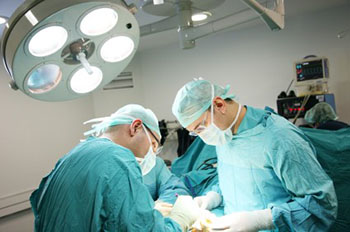
When it comes to receiving foot and ankle surgery, it’s typically a case by case situation. Some factors that play a role in whether or not you need surgery include the severity of your symptoms as well as your response to other conservative, noninvasive treatment methods.
There are a number of different foot and ankle conditions that may benefit from surgery as a treatment option. Bunions, hammertoe, metatarsal, ankle arthritis, Achilles tendon disorders, Morton’s neuroma, tibialis posterior disorder, and plantar fasciitis are all conditions that may require surgery as a treatment option, depending on their severity. Long-lasting pain relief is typically the biggest takeaway from having surgery performed to remedy your condition.
In order to best prepare for surgery, make sure you have a consultation with your podiatrist about your overall health, discuss any possible changes in medication, and ask any questions you may have about the procedure to go into the treatment with a clear head. In some cases, you may have to refrain from eating and drinking a few hours before the procedure, so make sure you understand what must be done on your end beforehand.
As for recovery, again, this will typically vary case by case and will be dependent on your condition and the type of surgery performed. Generally, it’s recommended that you get plenty of rest, ice the affected area, compress the wound to aid in further strain, and keep the area elevated to reduce any possible swelling. In some cases, your podiatrist may encourage you to use bandages, splints, surgical shoes, casts, crutches, orthotics, or a cane, depending on how much weight they believe your foot and ankle can bear.
If you’d like to determine whether surgery is the best option for you and your foot condition, consult with a podiatrist who will be able to give you a proper diagnosis and aid you with your decision.
Foot Surgery Q & A
Why might I need foot surgery?
You might need foot surgery if you suffer a traumatic injury like a severe fracture that can’t heal properly on its own. The other main reason for needing foot surgery is when conservative treatments aren’t relieving foot pain or improving your mobility.
For most patients, the extensive range of nonsurgical treatments available at Trinity Foot & Ankle Specialists prove highly effective in resolving foot problems. Advanced therapies like custom orthotics (corrective shoe inserts), CO2 laser treatment, cold laser, and ultrasound therapy help many people avoid surgery.
On some occasions, however, foot surgery is your best option for optimal recovery.
What conditions might require foot surgery?
Some of the conditions that could require foot surgery include:
Bunions
Bunions are bony projections at the side of your foot caused by a misalignment of the big toe bones. Tailor’s bunions or bunionettes form on the outside of your foot.
Flat feet
Flexible flat feet lose their arches when you stand. Rigid flat feet have no arches at all.
Brachymetatarsia
Brachymetatarsia is an abnormally short bone in the forefoot that makes one toe (often the fourth) noticeably shorter.
Metatarsus adductus
Some babies are born with metatarsus adductus, where their forefoot turns inward. Surgery is usually only needed if the feet are inflexible.
Pes cavus
Pes cavus or cavus foot is a condition where you have abnormally high arches.
Other conditions that sometimes require surgery include Morton’s neuroma, tendonitis, plantar fasciitis, diabetic ulcers, and hammertoes.
What does foot surgery involve?
The Trinity Foot & Ankle Specialists team uses minimally invasive approaches if possible when performing foot surgery. These techniques use small incisions that minimize tissue damage, so you feel less pain after your foot surgery and recover more quickly. However, in certain cases, open surgery might be necessary.
Foot surgeries like pes cavus and flatfoot reconstruction realign the structures within the foot to create a better arch. Brachymetatarsia might require bone grafting to lengthen the shortened toe, while metatarsus adductus surgery involves releasing the forefoot joints to straighten the foot.
Bunionectomy and tailor’s bunionectomy might involve osteotomy (cutting the bones to straighten them) and fusion, which joins the bones together. Joint replacement surgery is also possible in the foot if you have a condition like severe arthritis.
To benefit from the exceptional skills of the foot surgeons at Trinity Foot & Ankle Specialists, call their office today or book an appointment online.
