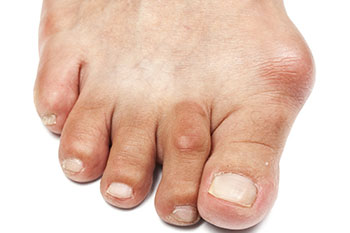
A bunion is a bony, painful swelling that is often formed on the first joint of the big toe. Bunions can be extremely painful due to the weight of all your body resting on it each time you take a step. Everyday activities, such as walking and wearing shoes, can cause you extreme discomfort if you have a bunion.
Reasons that a person may develop a bunion can vary. Some patients may form bunions due to genetic factors, complications with arthritis, or a weak foot structure. General aging can also play a role in the formation of a bunion.
If you have a bunion, you may notice a bony bump on your big toe, experience swelling and redness, and the area may feel tender to the touch. To help alleviate the pain that often comes with having a bunion, it’s suggested to maintain a healthy weight to help lessen the pressure on your toe, practice both heating and icing the affected area, wear wide-fitting shoes wear to leave plenty of space for your toes and to minimize rubbing, and look into shoe inserts that can help position your foot correctly.
Because bunions can result in other painful foot problems, such as hammertoes and bursitis, we recommend that you meet with a podiatrist for a professional diagnosis and for information regarding all your treatment options.
Bunions Q & A
What is a bunion?
A bunion, also known as hallux valgus, is a type of foot deformity that affects the joint in the big toe. You may describe your bunion as a bony bump.
This bump occurs because of changes in the bony framework in the front part of your foot. The bone in the big toe moves toward the second toe instead of staying straight, while the long bone in the foot moves toward the inside of your foot.
Bunions start out as a slight change in the alignment of the big toe. Slowly, over time, the bones shift, producing the bump, which becomes prominent and painful.
What causes a bunion?
Pressure on your feet when you walk and the structure of your foot contribute to the development of a bunion.
You may be at risk of developing a bunion if you inherit a faulty foot type that affects the mechanical structure of the foot. This foot type doesn’t cause bunions, but puts you at greater risk of developing the foot problem.
Additionally, your shoe choice — shoes that crowd the toes — can worsen the deformity. However, the type of shoes you wear isn’t the underlying cause of the bunion.
What happens during a bunion evaluation?
When you visit Trinity Foot & Ankle Specialists for a bunion evaluation, you can expect a thorough exam. Your podiatrist reviews your symptoms and examines your feet. They also take X-rays to assess the severity of your deformity and monitor its progression.
How is a bunion treated?
Treatment for your bunion depends on the severity of your deformity. Getting an early diagnosis and treatment plan in place may delay the worsening of your bunion and pain.
Initially, the team at Trinity Foot & Ankle Specialists may recommend conservative care, such as:
- Change in shoewear
- Padding
- Custom orthotics
- Splinting, strapping, or bracing
- Activity modification
- Nonsteroidal anti-inflammatory drugs (NSAIDs)
- Icing
- Injection therapy
If your foot deformity is severe and conservative care fails to ease your symptoms, the board-certified foot and ankle surgeons at Trinity Foot & Ankle Specialists may talk to you about surgery for your bunion.
The team offers many bunion reconstruction options, including minimally invasive techniques and traditional open surgery. For large deformities, the team performs a Lapidus procedure or bunionectomy (removing the bony bump).
To discuss treatment options for your bunions, call Trinity Foot & Ankle Specialists, or schedule a consultation using the online booking button today.
