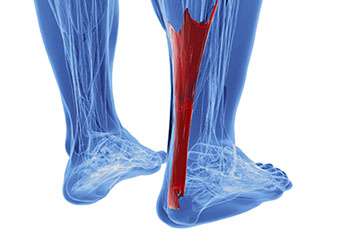
The Achilles tendon is not only the strongest, but also the largest tendon in the human body. The main function of the Achilles tendon is to transmit power from the calf muscles to the heel and the foot.
It’s because of the Achilles tendon that we are able to stand on our toes when walking, running, or jumping. Even with all of its strength, the Achilles tendon can be exposed to injury. Due to its limited blood supply and the high tensions placed on it, the Achilles heel can be left vulnerable if harmed.
Possible conditions that may arise due to injury of the Achilles tendon include tears, ruptures, tendinitis, peritendinitis, tendinosis, tendinopathy, and bursitis. When trying to diagnose if one has issues with their Achilles tendon, a podiatrist will commonly check for any pain, swelling, or discoloration around the heel or lower leg area. Different treatments for issues concerning the Achilles tendon vary, but may include over-the-counter or prescribed pain relievers for intense discomfort, alternating ice and heat therapy, custom-made orthotics, physical therapy, and in severe cases, surgery. To help prevent injury to the Achilles tendon, it’s recommended to regularly perform stretches involving the muscles of the lower leg.
If you or someone you know is experiencing pain or discomfort involving the Achilles region, seek out the help of a podiatrist for a proper diagnosis and treatment regime.
Achilles Tendon Q & A
What is the Achilles tendon?
The Achilles tendon is the longest tendon in your body. It joins your calf muscles and your heel bone. This tendon allows you to lift your heel, so you need a healthy Achilles tendon to walk, climb stairs, jump, run, and stand on your toes.
While the Achilles tendon can stand more than 1,000 pounds of force at one time, it’s still possible to injure it with enough stress.
What are the different types of Achilles tendon injuries?
There are several types of Achilles tendon injuries, including:
Achilles tendonitis
Achilles tendonitis occurs when excessive activity causes swelling and pain in the tendon. Athletes are particularly prone to Achilles tendonitis.
Achilles tendinosis
Achilles tendinosis can occur if Achilles tendonitis is untreated. Achilles tendinosis features tendon degeneration and small tissue tears. The tendon becomes harder and thicker, with scar tissue buildup.
Achilles tendon rupture
An Achilles tendon rupture is a partial or complete tendon tear. It usually occurs suddenly, with a forceful movement involving the calf muscles. Achilles tendon ruptures are more likely to occur in people aged 30-40, and it’s five times more likely to happen in men than in women.
The Achilles tendon is also involved in some other foot and ankle issues. For example, equinus — a condition that limits upward movement of your ankle joint — is usually caused by Achilles tendon tightness.
What are the symptoms of an Achilles tendon injury?
Achilles tendon injuries can cause several issues, including:
- Pain or soreness above your heel, which is often worst in the morning
- Swelling above the heel
- Bruising above the heel
- Worsening of pain during physical activity
- Difficulty walking
- Difficulty standing on your tiptoes
- Difficulty flexing your foot downward
- Popping or snapping sensation or sound (tendon rupture)
These issues are a serious warning sign. If you experience possible signs of an Achilles tendon injury, it’s best to stop physical activity right away and schedule an appointment at Trinity Foot & Ankle Specialists for help.
How are Achilles tendon injuries treated?
Treatment of Achilles tendon injuries may initially include conservative protocols like physical therapy, bracing, anti-inflammatory drugs, and rest. However, with more serious injuries like complete ruptures, you may need surgery.
Trinity Foot & Ankle Specialists has the extensive experience needed to treat all types of Achilles tendon injuries, including advanced training in minimally invasive and open surgery techniques.
To get help for your Achilles tendon injury, call the experts at Trinity Foot & Ankle Specialists, or click the online appointment maker now.
